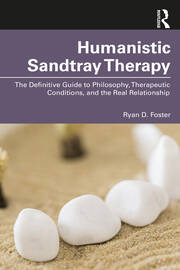
A dynamic, experiential approach grounded in the synthesis of person-centered and Gestalt theories — designed to harness the power of the here-and-now in therapeutic healing.
"A dynamic, experiential philosophical approach to sandtray therapy grounded in a synthesis of person-centered and Gestalt theories in which the power of the here-and-now is harnessed to invite clients into increased awareness and paradoxical change."
— Ryan D. Foster, PhD, Humanistic Sandtray Therapy (Routledge)Humanistic Sandtray Therapy (HST) is not simply a technique — it is a philosophical orientation to the therapeutic relationship and the healing process. At its core, HST invites clients to externalize their inner world through the creation of sandtray scenes using miniature figures, sand, and symbolic imagery.
What distinguishes HST from other sandtray approaches is its deep commitment to humanistic values: the inherent worth and growth potential of every person, the primacy of the therapeutic relationship, and the transformative power of present-moment awareness.
Rooted in Carl Rogers' core conditions — empathy, unconditional positive regard, and congruence — the therapeutic relationship is the vehicle of change.
Drawing on Fritz Perls and Gestalt theory, HST foregrounds here-and-now awareness, figure/ground dynamics, and contact boundary work.
The sandtray provides a tangible, symbolic space where clients can express what words alone cannot — bridging the conscious and unconscious.
Grounded in Beisser's paradoxical theory of change: growth occurs not through force, but through full acceptance of what is.
HST draws from two rich humanistic traditions, weaving them into a cohesive, clinically powerful approach.
Carl Rogers' person-centered approach forms the relational backbone of HST. The therapist's genuine presence — characterized by empathy, unconditional positive regard, and congruence — creates the conditions for healing.
In HST, the therapist does not interpret or direct. Rather, they accompany the client with full presence and trust in the client's inherent capacity for growth and self-direction.
Gestalt theory, developed by Fritz Perls and colleagues, brings a focus on present-moment awareness, organismic self-regulation, and the contact boundary between self and environment.
In HST, Gestalt concepts animate the sandtray experience — helping clients become aware of unfinished business, contact boundary disturbances, and the dynamic interplay of figure and ground within their created worlds.
Six organizing principles shape how HST is practiced across clinical settings, populations, and presenting concerns.
Understanding the "why" behind HST ensures that technique flows from philosophy — not the other way around.
Practitioners develop practical, immediately applicable skills for facilitating the sandtray process with warmth and intention.
Process components allow clinicians to reach incredible emotional depth with clients to promote optimal change and growth.
Practitioners learn to harness the power of present-moment awareness in their work — for clients and themselves.
HST can be used across developmental levels, cultural backgrounds, and clinical presentations with adaptability and respect.
Training in HST transforms practitioners — not just clinically, but personally. Growth is one of the most cited outcomes of HST training.
Humanistic Sandtray Therapy, published by Routledge, is the foundational text for practitioners seeking to understand and apply HST in clinical practice. Written by the approach's developer, Dr. Ryan D. Foster, it provides a comprehensive theoretical framework, practical guidance, and a richly humanistic vision for sandtray work.
The book serves as the primary resource for all HSTI training programs and is the scholarly backbone of the Certified Humanistic Sandtray Therapist (CHST) credential pathway.
"A must-read for any sandtray therapist seeking to deepen their theoretical grounding and clinical practice."
— Terry Kottman, PhD, Founder of Adlerian Play Therapy"Foster brings a fresh and deeply humanistic lens to sandtray therapy that is both scholarly and accessible."
— Linda Homeyer, PhD, Co-author of Sandtray Therapy: A Practical ManualThe best way to understand Humanistic Sandtray Therapy is to experience it. Explore our training pathways and begin your HST journey.

View Training Options