Scholarship & Research

Research at the Edge of Healing & Transformation

Dr. Foster's scholarship spans two interconnected areas: the clinical science of humanistic sandtray therapy, and the profound intersection of transpersonal experiences — especially near-death experiences — with grief, transformation, and counseling practice.

Three Streams of Scholarly Inquiry

Ryan's research agenda reflects a deep commitment to understanding how extraordinary human experiences — in and out of the therapy room — foster healing, growth, and transformation.

🏺

Humanistic Sandtray Therapy

Empirical, theoretical, and applied investigations into sandtray therapy as a humanistic clinical modality — including effectiveness research, meta-analysis, and philosophical foundations.

🌌

Transpersonal Experiences & Grief

Examining how near-death experiences, spontaneous mediumship, and other transpersonal phenomena intersect with grief, bereavement counseling, and human transformation.

🔬

Professional Issues in Counselor Education & Supervision

Investigations into workplace culture, ethical issues in faculty-student collaboration, supervisory models, and the professional identity development of counselors-in-training.

Research Spotlight
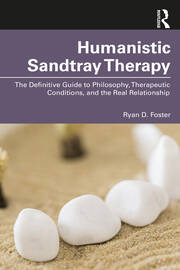
Humanistic Sandtray Therapy book cover

Humanistic Sandtray Therapy

From foundational theory to meta-analytic outcome research, Ryan's sandtray scholarship has shaped how practitioners conceptualize and apply this humanistic modality with diverse clients across the lifespan.

Peer-Reviewed Articles
Journal of Child and Adolescent Counseling · 2023

Holliman, R. P., & Foster, R. D. (2023). The way we play in the sand: A meta-analytic investigation of sand therapy, its formats, and presenting problems. Journal of Child and Adolescent Counseling, 9(2), 205–221.

World Journal for Sand Therapy Practice · 2023

Foster, R. D. (2023). Humanistic sandtray therapy: Theoretical underpinnings and practical applications. World Journal for Sand Therapy Practice, 1(7).

Journal of Child and Adolescent Counseling · 2015

Armstrong, S. A., Brown, T., & Foster, R. D. (2015). Humanistic sandtray therapy with preadolescents. Journal of Child and Adolescent Counseling, 1(1), 17–26.

Book Chapters
Routledge · 2022

Armstrong, S. A., Foster, R. D., & Hickman, D. L. (2022). Humanistic sandtray with preadolescent groups. In Mellenthin, Stone, & Grant (Eds.), Implementing play therapy with groups. Routledge.

Routledge · 2017

Armstrong, S. A., Foster, R. D., & Brown, T. (2017). Humanistic sand tray therapy. In B. Turner (Ed.), The Routledge international handbook of sandplay therapy (pp. 305–316). Routledge.

Springer · 2017

Armstrong, S. A., Foster, R. D., Brown, T., & Davis, J. (2017). Humanistic sandtray therapy with children and adults. In Leggett & Boswell (Eds.), Directive play therapy: Theories and techniques (pp. 217–254). Springer.

Peer-Reviewed Articles
Frontiers in Virtual Reality · 2025

Khandan, P., Ennemoser, B., Foster, R. D., Dubose, L., & Lu, Z. (2025). A virtual reality intervention to reduce death anxiety and stress in adults: Examining the effect of a near-death experience simulation. Frontiers in Virtual Reality, 6.

Journal of Near-Death Studies · 2020

Foster, R. D., Maxwell, L., & Butler, W. E. (2020). Coping with cancer: Case studies on the effects of learning about near-death experiences. Journal of Near-Death Studies, 38(2), 87–100.

Journal of Near-Death Studies · 2018

Foster, R. D., Kahoe, B. M., & Nardelli, D. H. (2018). Spontaneous mediumship experiences among near-death experiencers: A qualitative study. Journal of Near-Death Studies, 36(3), 172–184.

Journal of Near-Death Studies · 2015

Foster, R. D., Lee, D., & Duvall, A. G. (2015). Two cases of spontaneous mediumship experiences of near-death experiencers. Journal of Near-Death Studies, 34(1), 44–56.

Journal of Loss and Trauma · 2014

Foster, R. D., & Holden, J. M. (2014). Eternal connection: An exploratory study of the effects of learning about near-death experiences on adult grief. Journal of Loss and Trauma, 19(1), 40–55.

Journal of Near-Death Studies · 2014

Holden, J. M., Foster, R. D., & Kinsey, L. (2014). Spontaneous mediumship experiences: A neglected aftereffect of near-death experiences. Journal of Near-Death Studies, 33(2), 67–85.

Book Chapters
ACA · 2020

Foster, R. D., & Holden, J. M. (2020). Human and spiritual development and transformation. In Cashwell & Young (Eds.), Integrating spirituality and religion into counseling (3rd ed., pp. 117–142). American Counseling Association.

Praeger/ABC-CLIO · 2009

Foster, R. D., James, D., & Holden, J. M. (2009). Practical applications of research on near-death experiences. In Holden, Greyson, & James (Eds.), The handbook of near-death experiences: Thirty years of investigation (pp. 235–258). Praeger/ABC-CLIO.

Research Spotlight

Near-Death Experiences, Grief & Transpersonal Transformation

Ryan's doctoral dissertation examined how learning about near-death experiences affects adult grief — a thread he has pursued for over 15 years, culminating in cutting-edge VR research and a growing body of peer-reviewed scholarship on spontaneous mediumship and bereavement.

What We Know: The State of Sandtray Therapy Research

While rigorous outcome research on sandtray therapy is still developing, a meaningful body of evidence — including case studies, clinical reports, and emerging empirical work — points to its therapeutic value across populations and presenting concerns.

Client Experience

Positive client outcomes are widely reported across sandtray practitioners. Clients frequently describe emotional relief, insight, and increased self-awareness following sandtray sessions.

Case Study Evidence

Individual case studies document successful applications with children, adolescents, adults, and trauma survivors, consistently highlighting the value of symbolic and creative expression in sandtray work.

Trauma & PTSD

Emerging research suggests sandtray therapy may be effective in helping individuals process traumatic experiences and PTSD symptoms — the sensory, non-verbal nature of the work offering a safe container for difficult material.

Anxiety & Depression

Limited but promising studies indicate sandtray therapy may contribute to reducing anxiety and depressive symptoms by providing an expressive outlet for difficult emotions.

Children & Adolescents

Sandtray therapy has demonstrated particular effectiveness with younger clients, offering a non-threatening mode of communication for those who struggle with verbal expression.

Integrated Approaches

Research suggests that combining sandtray with humanistic or psychodynamic frameworks — as in HST — can enhance therapeutic outcomes, underscoring the value of theoretically grounded practice.

The absence of extensive large-scale outcome research does not indicate ineffectiveness — it reflects the need for continued systematic investigation. Dr. Foster's ongoing systematic review of the sandtray therapy literature is part of that effort. If you are considering sandtray therapy, consultation with a trained practitioner is recommended.

Current Projects & Grant Activity

Ryan's current research pushes into emerging territory at the intersection of technology, grief, and experiential therapy.

Under Review · 2026

NDEVR-Grief: Continuing Bonds

A cross-institutional VR and AI bereavement intervention examining the effect of an immersive near-death experience simulation on bereavement-related depression. Developed in collaboration with Texas A&M University and Prairie View A&M University.

Collaborators: Dr. Zhipeng Lu, Prof. Benjamin Ennemoser, Dr. Huiyi Xu

Texas A&M System REF Grant · $250,000
In Progress

Systematic Review of Sandtray Therapy Research

A comprehensive systematic review of the sandtray therapy research literature co-authored with Dr. Ryan Holliman — building on their 2023 meta-analytic work in the Journal of Child and Adolescent Counseling.

Co-author: Dr. Ryan Holliman

In Progress
In Progress

Work Culture in Counselor Education

A survey study investigating the professional climate and workplace culture experienced by counselor education faculty — using the Academic Climate Measure, a new instrument developed with collaborators.

Co-authors: Dr. Ryan Holliman, Dr. Pedro Blanco

In Progress
In Press

The Academic Climate Measure

Introducing a new instrument to measure counselor education faculty climate. Accepted for publication in the Journal of Counselor Preparation and Supervision.

Co-authors: Dr. Ryan Holliman, Dr. Pedro Blanco

In Press · JCPS

Interested in Collaboration or Training?

Whether you're a researcher, clinician, or practitioner curious about HST or transpersonal counseling, Ryan welcomes connection and conversation.

Get in Touch
Verified by MonsterInsights